This project's main objective is the reconstruction and safety upgrading of the bathing structures of the Hotel Excelsior Palace in Rapallo — structures damaged by the rarely intense weather events that occurred on 29 and 30 October 2018.
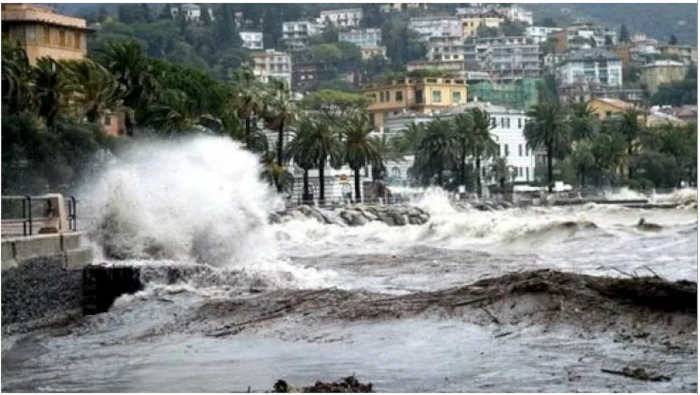
IMMAGINE 1: Le prime onde della mareggiata tra il 28 e il 29 ottobre 2018 sulla costiera tra Rapallo e Portofino che hanno provocato grandissimi danni abbattendo anche il muro del porto di Rapallo e affondando tutti gli yacht presenti
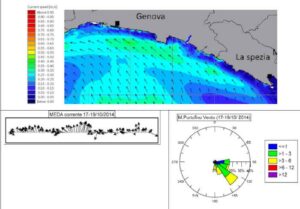
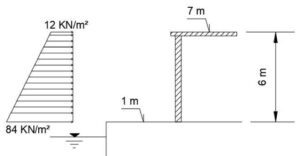
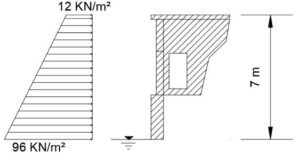
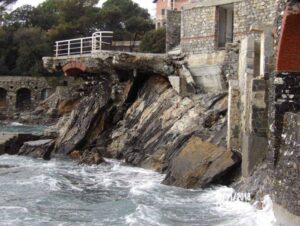
During the day and night of 29 and 30 October 2018, a powerful storm surge fed by a sirocco wind struck Liguria; in particular, in the Gulf of Tigullio, the coast running from Rapallo to Portofino was hit, exposed precisely in that direction and with a seabed bathymetry that contributed to the development of very powerful waves. The weather event grew in intensity over the course of the day: the wind reached 170 km/h and the height of the waves striking perpendicularly to the hotel's structures was 10.30 m, roughly the level of the upper road towards Portofino. The event proved catastrophic along the entire coastline and, in particular, on this promontory, to the extent that it brought down, over a 300 m stretch, the breakwater of the port of Rapallo, which following a storm surge in 2000 had already been rebuilt 1.30 m higher, bringing it to a height of 6.5 m.
The bathing buildings of the G.H. Excelsior Palace struck by the storm surge were built in the 1990s and consisted of direct foundations laid on the rock, reinforced concrete columns, embedded beams and brick-and-concrete floor slabs.
The impact of the waves was devastating, demolishing many parts of the existing structures.
To allow the full operation of this important tourist complex during the 2019 bathing season, it was necessary to proceed immediately with the design for their reconstruction.
The client therefore required structures to be put in place that would show a resistance far superior to the waves, while keeping the characteristics of the tourist facilities unchanged and improving the overall stability of the cliff.
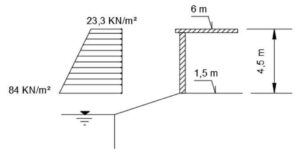
The actions to which the structures at that point could be subjected had been calculated using "Goda's" theory, obtaining results similar to those subsequently recorded during the storm surge; this entails thrusts on the vertical walls of approximately 9,000 kg/m².
By developing the calculations with the data provided by the cartography of the Liguria Region and using Goda's theory, the following thrust diagrams were obtained on the vertical walls of the structure at various heights from the sea, referred to the zero datum of the Rapallo harbour master's office.
The cliff consists of a dip-slope bank of "Antola Limestone" alternating with layers of clay; this foundation ground is discontinuous both because of its sub-horizontal stratification and because of the presence of vertical fractures between the various rocks.
Hence the need to take the foundation structures, such as the bolts, down to depth, allowing the actions coming from the building structure to be distributed within the rock mass, carrying them away from the surface of this material, which over the years may have deteriorated.
Extract from the geological report:
"The classification of the soils, in accordance with the provisions of Eurocode 8, is obtained from the indication of the penetrometric survey carried out nearby by the undersigned, from which it emerges that the shallow foundation affects a moderately dense layer with a predominance of cohesive clayey component, with average values Nspt = N10/.70 Nspt = 8, for which a reference Vs30 of ≤ 180 is indicated in the tables (Eurocode 8), overlying (detected stratigraphic boundary) very dense deposits with Nspt ≥ 50 (weathered cap of the rocky substrate), to which Vs30 values within a range of 360–800 correspond. The soil category is normally referred to the velocity of the S-waves, and this is calculated as the velocity in the first 30 metres of the ground according to the formula Vs = 30/ ∑i=1, N Hi/Vi"
For the structures to be rebuilt, a structural type was therefore conceived, composed of:
All using materials with high chloride resistance, for example R45 concrete with chloride additives; it remained to be decided how to anchor the structures to the cliff below in a widespread and permanent manner.
Puoi scegliere di impedire a questo sito web di aggregare e analizzare le azioni che intraprendi qui. Ciò proteggerà la tua privacy, ma impedirà al proprietario di imparare dalle tue azioni e di creare un'esperienza migliore per te e per gli altri utenti.
You may choose to prevent this website from aggregating and analyzing the actions you take here. Doing so will protect your privacy, but will also prevent the owner from learning from your actions and creating a better experience for you and other users.


